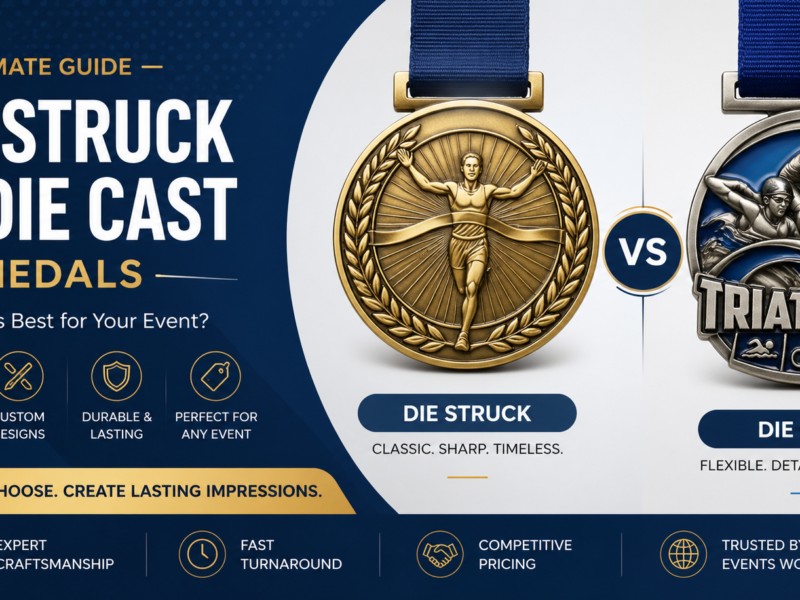
Die Struck vs Die Cast Medals: Which is Best for Your Event?
Choosing the right manufacturing method for your custom medals can make a big difference in quality, appearance, cost, and turnaround time. Two of the most popular options are die struck medals and die cast medals—but which one is best for your event?
In this guide, we’ll break down the differences, pros and cons, and help you decide which option suits your needs.
What Are Die Struck Medals?
Die struck medals are made by stamping a design into a solid sheet of metal using high pressure. This traditional method creates a clean, sharp, and classic look.
Key Features:
- Made from solid metals like iron, brass, or copper
- Stamped using a custom mold (die)
- Typically finished with plating (gold, silver, bronze, antique)
- Can be polished or sandblasted for contrast
Advantages:
1. Premium Look & Feel
Die struck medals offer a timeless, high-end appearance. They’re often used for prestigious events.
2. Sharp Details
The stamping process creates crisp lines and fine detailing.
3. Durable & Solid
Heavier and more robust compared to other methods.
Limitations:
- Limited to 2D designs (raised and recessed areas only)
- Not ideal for complex cut-outs or hollow sections
Higher cost for intricate designs
What Are Die Cast Medals?
Die cast medals are produced by pouring molten metal into a mold. This method allows for more flexibility in shapes and designs.
Key Features:
- Made from zinc alloy or similar metals
- Molded instead of stamped
- Suitable for 2D and 3D designs
- Can include cut-outs and intricate shapes
Advantages:
1. Design Flexibility
Perfect for creative, modern, or highly detailed medal designs.
2. 3D Capabilities
Allows for depth, texture, and sculpted elements.
3. Cost-Effective for Complex Designs
More affordable when producing intricate shapes or large volumes.
Limitations:
- Slightly less sharp detailing compared to die struck
- Lighter weight (depending on design)
- May not have the same “classic” premium feel
Side-by-Side Comparison
| Feature | Die Struck Medals | Die Cast Medals |
|---|---|---|
| Design Style | Classic, 2D | Flexible, 2D & 3D |
| Detail Quality | Sharp and crisp | Good, but slightly softer |
| Weight | Heavier, solid feel | Lighter (varies) |
| Complexity | Limited | Highly flexible |
| Cost | Higher for complex designs | More cost-effective |
| Best For | Prestige events | Creative/custom shapes |
Which One Should You Choose?
Choose Die Struck Medals if:
- You want a traditional, premium look
- Your design is simple or moderately detailed
- You’re organizing a formal event (e.g., corporate awards, military, academic achievements)
Choose Die Cast Medals if:
- You need complex shapes or cut-outs
- Your design includes 3D elements
- You want creative freedom for branding or themed events
- You’re working with a tight budget for detailed designs
Best Use Cases
Die Struck Medals:
- Marathons and endurance races
- Corporate recognition awards
- Military or official commemorations
Die Cast Medals:
- Sports tournaments with unique themes
- Fun runs and charity events
- Custom promotional giveaways
Final Thoughts
There’s no one-size-fits-all answer—the best choice depends on your design, budget, and event style.
- If you want elegance and tradition, go with die struck medals.
- If you want creativity and flexibility, choose die cast medals.
For many events, a combination of both methods can even be considered depending on award tiers.
Need Help Designing Your Custom Medals?
Whether you’re planning a marathon, corporate event, or sports competition, working with an experienced manufacturer can help bring your vision to life. From concept to production, choosing the right method ensures your medals leave a lasting impression.